Skip to content
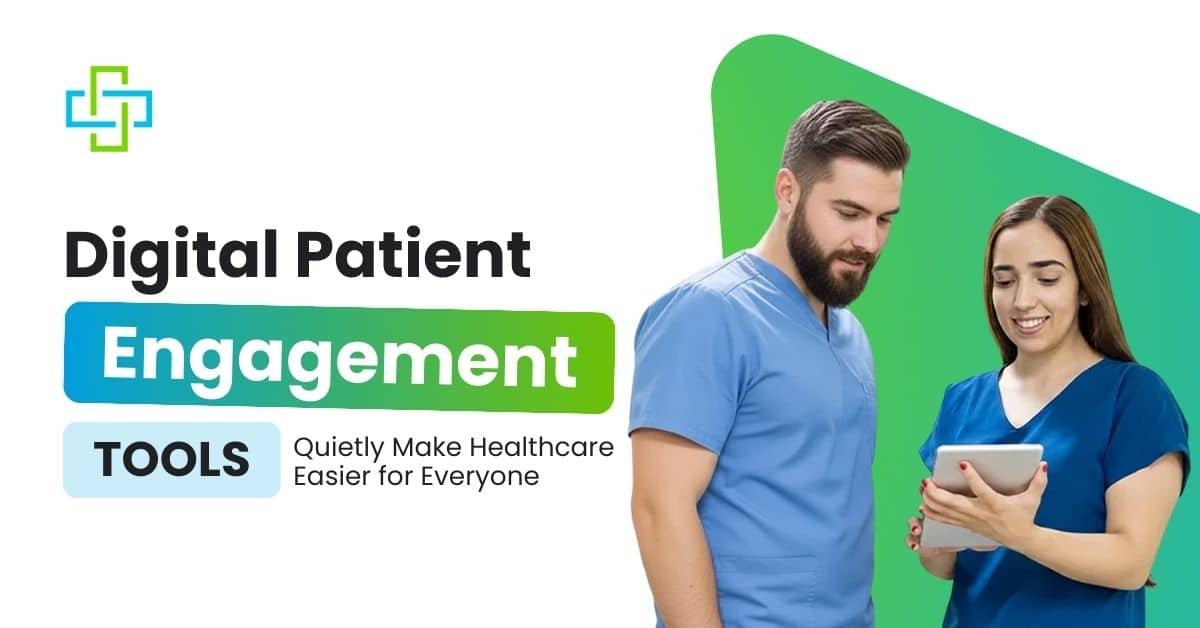
Healthcare has a phone problem. Patients sit on hold forever just to book an appointment. Staff spend all day answering the same questions. Everyone’s frustrated, and nobody’s happy with how things work.
People can order food, book hotels, and manage their bank accounts from their phones in seconds. But scheduling a doctor’s appointment still requires a phone call during business hours and a small miracle.
That’s finally starting to change. Digital patient engagement tools are showing up in more clinics, and they’re fixing problems that have annoyed everyone for years.
How Digital Patient Engagement Tools Work?
Digital patient engagement tools are apps, websites, and online systems that make taking care of your health easier and faster. Instead of calling the doctor’s office or sitting in waiting rooms, you can do a lot of things from your phone or computer. Need to book an appointment? You can do it anytime, even late at night. Want to check your test results? They appear online as soon as they’re ready. Need a prescription refill? A few taps and it’s taken care of.
These tools aren’t complicated. They’re just designed to make healthcare fit into your life the way other things already do. Fast, simple, and convenient.
Why Clinics Are Finally Paying Attention?
Patients who stay connected with their healthcare team tend to have better health outcomes. When it’s easy to reach doctors or get updates, they are more likely to keep appointments, take medications correctly, and notice small issues before they become big problems.
For instance, clinics started sending text reminders to patients. Their no-show rates dropped by half. That wasn’t just good for scheduling, it meant patients received care on time, and the clinic could operate more efficiently.
Feeling connected also makes patients more active in their care. They ask questions when something isn’t clear, follow treatment plans more closely, and are less likely to end up in the emergency room. Patient engagement services make all of this possible without requiring constant phone calls or in-person visits, saving time for both patients and healthcare providers.
The Digital Patient Engagement Tools Worth Knowing About
Digital patient engagement tools come in many forms, and each one helps make healthcare easier to manage. From checking test results to booking appointments, these digital patient engagement tools give patients more control and keep communication with their doctors simple and clear. They save time, reduce mistakes, and make it easier to stay on top of your health.
- Patient Portals are like a central place for your health information. You can see medical records, prescriptions, upcoming appointments, and test results. Everything in one spot.
- Online Scheduling lets patients book appointments anytime. Pick a time, confirm, and skip the phone call. For clinics, it keeps schedules full and reduces interruptions.
- Text Message Systems help patients remember appointments. A quick text the day before can cut no-shows in half. Some systems even let patients confirm or cancel just by replying.
- Telehealth Platforms became popular during the pandemic and are still useful. Many follow-ups, prescription renewals, and minor concerns can be handled through video calls instead of an office visit.
- Health Tracking Apps let patients record things like blood pressure, blood sugar, or symptoms. Doctors can see the data directly, so patients don’t have to remember numbers from weeks ago.
- Patient Education Tools send simple, easy-to-understand information about conditions and treatments. Short videos or clear articles work better than medical websites that assume everyone is a doctor.
What Makes Some Digital Patient Engagement Tools Better Than Others?
Some tools just sit there and get ignored. The ones that help make MIPS healthcare easier. They fit into routines, work on phones, and cut out unnecessary steps.
- First, they are simple. If a tool is confusing or hard to figure out, people won’t use it. The best digital patient engagement tools are clear and easy to understand from the start, so patients can focus on their health instead of learning complicated systems.
- Second, they work well on smartphones. Most patients check their schedules, test results, or messages on their phones, not a laptop. Tools that don’t work easily on a phone are often ignored.
- Third, they save time for everyone. Bad tools can create more work for patients and clinic staff. Good tools make everyday tasks faster and reduce hassles, like scheduling appointments or sending reminders.
Prime Well Med Solutions focus on solutions that fit naturally into how clinics operate. The technology is designed to support healthcare teams and patients, not force them to adjust to complicated systems. When the tools work this way, care becomes smoother, communication improves and everyone benefits.
What It Costs and What You Get?
Yes, these digital patient engagement tools cost money. But most clinics find they save more than they spend.
Every missed appointment is a loss. If digital patient engagement tools cut no-shows by even 25%, that money comes back. When patients take their medicines on time, there are fewer emergencies and problems. When patients do small tasks through a portal, staff don’t get buried in phone calls.
Patient engagement solutions often have different pricing options. Clinics can start small and add features later. Some charge per patient each month. Others have a flat fee. The important thing is to pick something the clinic can afford and that patients will actually use.
Getting Patients on Board and Using the Digital Patient Engagement tools
This is where a lot of clinics go wrong. They spend money on great tools, but barely anyone actually uses them. The thing is to make signing up as simple as possible. If patients have to create an account, remember a password, or check their email for a code, most will give up halfway. The best systems only need a phone number or a quick link to get started.
And it’s not just about patients, staff have to be on board too. If the front desk doesn’t understand the system or doesn’t trust that it works, they won’t encourage patients to use it. Everyone in the practice needs to believe in it for it to actually succeed.
The Road Ahead for Digital Patient Engagement Tools
Healthcare keeps moving forward. These days, AI chatbots can answer simple questions, and wearables can automatically send updates to your doctor. Some systems can even spot when a patient might need help before things get serious.
The intention isn’t to replace people, it’s to make care run smoother. When technology takes care of the routine work, doctors and nurses can focus on the parts of care that need their judgment and experience.
Start Small and Build From There
Practices feeling overwhelmed by options should start with one problem. Maybe it’s appointment no-shows. Maybe it’s patients calling with the same questions over and over. Pick that problem and find a tool that addresses it.
Talk to other practices about what they use. Read reviews from users and learn not to trust only the tool’s marketing. The fanciest option isn’t always the best one.
The right digital patient engagement tools should make life easier, not add another layer of problems. When patients can connect with their care team more easily and staff spend less time on busy work.
The Bottom Line
Healthcare is personal. That’s never going to change. But personal doesn’t mean outdated or inefficient.
The practices figuring this out now are the ones patients will stick with. Because once someone experiences the ease of booking appointments from their phone or getting test results without playing phone tag, going back to the old way feels unbearable.
Digital tools for patients are already here. The question is how fast clinics will catch up to what patients expect.
You May Need to Read:
Patient Engagement Strategies to Improve Every Step of the Patient Journey
10 Patient Engagement Platforms That Work The Best in 2026
Why AI for Patient Engagement is the Next Big Thing in Healthcare