Managing the financial side of healthcare is tough. Revenue cycle management for hospitals handles everything from when a patient books an appointment to when the final payment comes through. Getting this process right means hospitals get paid properly for their services while keeping patients happy with clear billing.
Every hospital needs a solid system to track patient revenue. When done well, it cuts down on errors, speeds up payments and keeps the organization financially healthy. That is where revenue cycle management solutions come in. They help healthcare facilities run smoothly and avoid the headaches that come with billing mistakes.
What Does Revenue Cycle Management for Hospitals Mean?
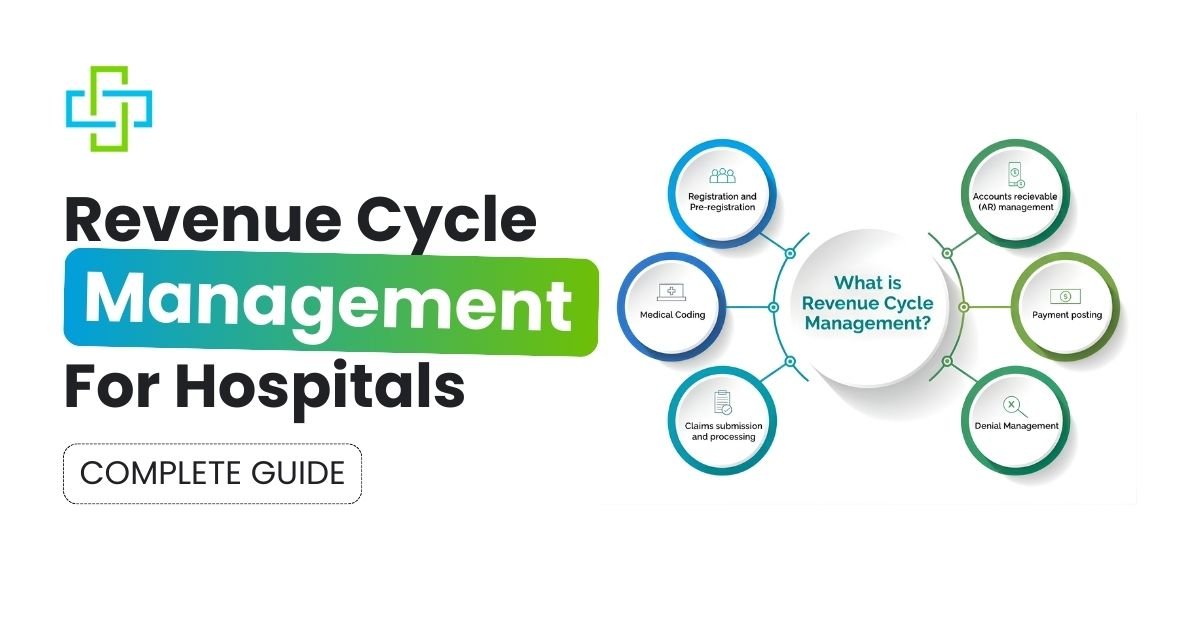
Think of it as tracking money through every step of patient care. It starts before the patient walks through the door and continues until every bill gets paid. Medical revenue cycle management services cover registration, insurance checks, coding, claims, payments and collections.
Different hospitals handle this differently based on their size and resources, but most follow a similar path with seven main steps.
Step 1: Getting Patients Registered
Everything starts when someone schedules an appointment. The front desk team collects basic information like name, birthday, address, phone number and insurance details. Getting this right matters because wrong information here causes problems later.
Staff members need to grab policy numbers, check that insurance information matches and get any required referrals before the visit happens. Simple mistakes at this stage can delay payments for weeks.
Step 2: Checking Insurance Coverage
Before any treatment happens, hospitals check whether the patient’s insurance is valid and confirm what services it will pay for. This step prevents surprise bills and claim rejections down the road. Revenue cycle management for hospitals requires careful insurance verification to avoid payment delays.
The team confirms what the insurance covers, checks copays and deductibles and figures out if certain procedures need prior approval. Patients are told ahead of time what their out-of-pocket costs might look like, which makes the whole process clearer and avoids any surprises.
Step 3: Medical Coding
After the doctor sees the patient, someone needs to translate the diagnosis and treatment into billing codes. Medical coders review doctor notes and assign standard codes. CPT codes for procedures, ICD codes for diagnoses and HCPCS codes when needed.
These codes must match exactly what happened during the visit. Wrong codes mean rejected claims or reduced payments. The codes then get entered into the hospital’s electronic system so claims can move forward. Revenue cycle management for hospitals depends on accurate coding to ensure proper reimbursement.
Step 4: Sending Out Claims
Once coding is complete, claims go to insurance companies for payment. RCM services help ensure these claims include all the right patient information, provider details and service codes.
Most claims go electronically these days, which speeds things up. The billing team reviews everything for completeness before hitting send. They also track claims to catch any processing delays early. Revenue cycle management for hospitals includes thorough claim tracking to maximize collections.
Step 5: Recording Payments
When insurance companies process claims, they either send payment or deny the claim. Either way, the hospital needs to record what happened. Payment posting means entering what the insurance paid into the billing system and checking that it matches what was expected.
Staff review explanation of benefits statements, spot any payment differences and apply adjustments when needed. Sometimes, a secondary insurance gets billed if the patient has additional coverage.
Step 6: Handling Denied Claims
Claims get denied all the time. Wrong codes, missing information, coverage issues. A revenue cycle management company knows how to analyze why claims are rejected and fix them. Hospitals need to handle claim denials fast so they can recover the money they’re owed without delays.
The denial management team sorts rejections into categories, corrects the problems and resubmits claims with proper documentation. They track these resubmissions to make sure they get resolved. Good denial management recovers money that would otherwise be lost.
Step 7: Patient Billing
After insurance pays its portion, patients get billed for whatever is left. The hospital sends clear statements showing what they owe and why. Many facilities offer payment plans to help patients manage larger bills.
Collections staff follow up on unpaid balances through phone calls, emails or text messages. They process payments and update accounts as money comes in. Being respectful and helpful during this step keeps patients satisfied even when dealing with medical bills. Revenue cycle management for hospitals includes patient friendly billing practices.
Career Opportunities in RCM
Plenty of jobs exist in this field for people who like working with numbers and healthcare. Entry-level positions include patient access representatives who register patients, insurance verification specialists who check coverage and medical schedulers who organize appointments.
Medical coders translate doctor notes into billing codes. They need strong knowledge of medical terms and coding systems. Charge capture specialists make sure every billable service gets recorded. Revenue cycle management for hospitals creates many job opportunities across different skill levels.
Billing specialists submit claims to insurance companies. They understand coding systems and know how to prevent claim denials. Denial management specialists investigate rejected claims and work to get them paid.
Accounts receivable specialists track unpaid claims and follow up until payment arrives. Patient collections specialists contact patients about outstanding balances and set up payment arrangements.
Revenue cycle analysts look at data to find ways to improve the whole process. They track important metrics and identify bottlenecks that slow down payments.
Management positions include revenue cycle managers who oversee teams, compliance officers who ensure the hospital follows regulations and directors who develop strategies for the entire operation. Revenue cycle management for hospitals needs skilled leaders to coordinate all these moving parts.
Skills That Can Help You Get A Job in RCM
People who work in medical RCM really have to pay attention to the small stuff, because even tiny mistakes can turn into major headaches. Understanding medical terminology, insurance policies and coding systems is needed. Customer service skills matter too, especially when dealing with patients about bills.
Analysts and managers need data skills to spot trends and solve problems. Leaders need to think long-term and create policies that help the entire organization run more smoothly and efficiently.
The Future of Hospital RCM
Technology continues to change how hospitals manage revenue cycles. Artificial intelligence helps catch errors before claims go out. Automation takes over the everyday busywork, so the team can put their attention on the harder problems that need human judgment. Revenue cycle management for hospitals is becoming more efficient with these technological advances.
More hospitals are partnering with specialized these solutions providers like Prime Well Med Solutions to handle some or all of these processes. These partnerships let hospitals focus on patient care while experts handle the financial side.
The Last Thoughts
Revenue cycle management for hospitals remains a growing field with steady demand for skilled professionals. Healthcare organizations need people who understand both the clinical and financial sides of medicine.
Whether you are interested in coding, billing, analysis or management, opportunities exist at every level. This work directly supports patient care by making sure healthcare facilities have the resources they need to run smoothly.
For hospitals looking to improve their financial processes, working with experienced providers of revenue cycle management solutions makes sense. The right partner brings expertise, technology and proven processes that lead to better outcomes for both the organization and its patients. Revenue cycle management for hospitals delivered by PrimeWell’s helps healthcare facilities maximize revenue while maintaining excellent patient satisfaction
May You Need to Read:
Revenue Cycle Management Companies