Skip to content
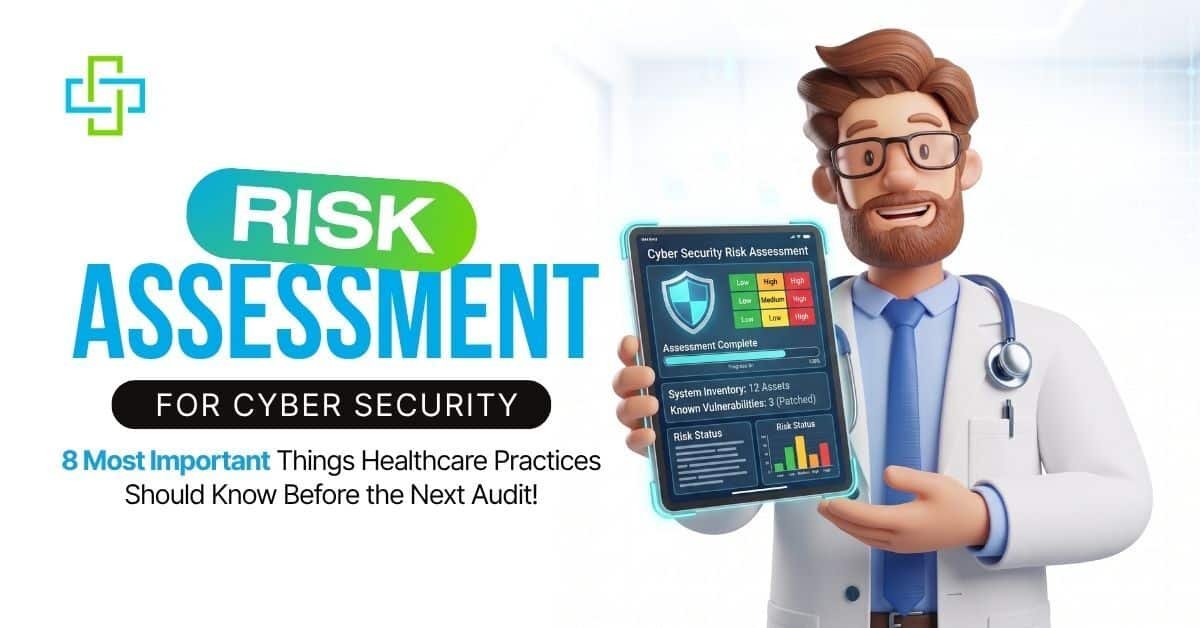
A risk assessment for cyber security is the process of mapping out where a practice’s systems, devices, and patient records are exposed. Also work out how likely an attacker is to find that exposure and what the fallout would look like if they did. It sounds technical on paper, but most of the work resembles bookkeeping more than hacking. Someone lists what the practice has, checks who can access it, and writes down what’s missing. The output isn’t a single yes-or-no verdict about whether a practice is secure. It’s a ranked list of what could go wrong, sorted by what would suffer the most if it happened.
Prime Well Med Solutions sees this play out across small clinics and multi-provider groups alike. The practices that treat security risk assessment services for cyber security as a once-a-year form to file tend to repeat the same findings every cycle. The ones that treat it as a working document, something updated whenever a new EHR module goes live or a staff member leaves, walk into an audit with far less to worry about.
1. What a Risk Assessment for Cyber Security Covers
Three pieces sit underneath every assessment, regardless of how large the organization is. Assets are anything worth protecting: patient records, billing systems, scheduling software, the laptops front-desk staff use to check people in. Threats are the events that could damage those assets. Whether that’s a phishing email, a stolen laptop, or a vendor’s server getting breached. Vulnerabilities are the gaps that let a threat reach an asset. Mainly things like an unpatched server, a password nobody has changed in years, or a contractor who still has system access after the contract ended.
This process ties those three pieces together rather than treating them as separate checklists. It doesn’t stop at confirming a threat exists. It asks how likely that threat is to find a gap and what the damage would look like for patients, staff, and the practice’s finances if it did.
2. Internal Checks Look Different From External Ones
Internal reviews go through every laptop, server, and piece of network equipment inside the building, looking for outdated software, weak configurations, and devices nobody remembers adding to the network. External reviews work from the outside in. They scan public-facing systems the way an intruder would, probing for open ports, exposed logins, and software versions with known flaws.
Most practices need both kinds of testing. An internal-only review misses what a stranger on the internet can already see from outside the building. An external-only review misses the unlocked server room down the hall.
3. Why Healthcare Carries More Weight Than Most Industries
Patient records sell for more on the black market than nearly any other type of personal data. This is because a single file can carry a person’s medical history, insurance details, and Social Security number together. That alone puts clinics, hospitals, and billing offices higher on a hacker’s target list than most retail or service businesses. Industry breach-cost reports have ranked healthcare at or near the top for years running, ahead of finance and retail. This puts into perspective how attractive these records stay once they’re exposed.
Regulation adds another layer of pressure. The HIPAA Security Rule requires covered entities to perform a risk analysis and keep it current. Not as a one-time task but as something revisited whenever systems or staff change. A practice that has never documented this kind of assessment is not meeting that requirement, regardless of how secure its systems happen to be on a technical level.
What gets put at risk when this work gets skipped:
- Breach notification costs that can run into six figures once legal counsel, credit monitoring, and patient letters are factored in.
- Civil penalties from the Office for Civil Rights, which stack per violation category rather than per incident.
- Disruption to billing and scheduling systems during recovery, sometimes lasting weeks rather than days.
- Patient trust that takes years to rebuild after a breach becomes public.
4. Five Stages That Make Up the Process
The work tends to follow five stages, though the order can shift depending on how a practice operates day to day. None of them are optional. Skipping one usually shows up later as a finding nobody can explain when an auditor or a forensic investigator asks about it.
- Asset inventory: every device, application, and data store that touches patient information gets logged, including the ones IT forgot were still running.
- Threat identification: list out what could go wrong in practice, from ransomware to a former employee logging in with old credentials.
- Vulnerability analysis: test the gaps that let those threats through, using scans, configuration reviews, and sometimes a simulated attack.
- Risk scoring: rank each finding by likelihood and impact so leadership knows what needs attention first.
- Remediation planning: turn the findings into a list of fixes with owners and deadlines attached, not a report that sits in a drawer until next year.
5. Making Sense of Risk Assessment for Cyber Security Matrix
Once risks are scored, most assessors plot them on a risk assessment for cyber security matrix, a grid that lines up likelihood on one axis and impact on the other. A risk that’s unlikely and minor sits in the corner nobody worries about. A risk that’s likely and severe sits in the corner that gets fixed first, sometimes before the rest of the report is even finished.
The matrix isn’t decoration. It’s the tool that turns a list of forty or fifty findings into a short list of three or four items that need attention this quarter.
A 5×5 Grid Shows More Than a Three-Color Label
A basic version sorts findings into low, medium, or high. That works fine for a quick conversation, but it flattens too much detail for a practice juggling dozens of vendors, devices, and applications at once. A 5×5 grid, with five levels of likelihood and five levels of impact, gives leadership room to see the difference between a finding that’s merely annoying and one that could shut down billing for a week.
A risk assessment for cyber security matrix only holds up if someone revisits it on a schedule. A score from eighteen months ago, recorded before a new EHR rollout or a switch to remote scheduling, isn’t describing the practice that exists now.
6. How Often This Needs to Happen
HIPAA sets a floor, not a ceiling. The Security Rule expects a review at least once a year. But practices that only look into the topic on that annual cycle tend to find themselves managing problems that have already shifted by the time the next review comes around. A new scheduling vendor, a ransomware strain making the rounds in healthcare, or a wave of staff turnover can all change the picture within a few months.
A more workable approach treats the annual review as the floor and adds smaller check-ins whenever something changes: a new system goes live, a vendor contract ends, or a security incident happens nearby. None of those check-ins need to match the scale of the full review. They only need to ask whether anything from the last assessment has shifted enough to matter.
7. Gaps That Show Up Even in Careful Reviews
A handful of blind spots show up across practice after practice, even ones that take this work seriously. Most of them come down to scope, not effort. The list below covers the ones that turn up most often when a second set of eyes looks back over a practice’s history of past assessments.
- Vendor access gets overlooked. A billing company, a scheduling app, or a transcription service often has a direct line into patient data, and few practices ask those vendors for proof of their own security practices.
- Medical devices get left out. Infusion pumps, imaging systems, and remote monitoring tools run on software too, and that software needs patching like anything else on the network.
- Departed staff keep access. Login credentials for people who left months ago show up as one of the more common findings in any risk assessment for cyber security review, and one of the easiest to fix.
- The report gets filed and forgotten. An assessment that sits untouched until next year’s deadline stops reflecting how the practice runs day to day.
8. Handling This In-House or Bringing in Risk Assessment for Cyber Security Services
Some practices have an IT lead with the training and the time to run this work internally, document it properly, and keep it current between cycles. Most don’t. Hiring a dedicated security analyst is rarely practical for a single-location practice once salary, certifications, and ongoing training are factored into the budget. Between patient care, billing, and staffing, this kind of work tends to slide to the bottom of the list until a deadline or an incident forces the issue.
Bringing in outside security risk assessment services for cyber security closes that gap without requiring a practice to build a full security team from scratch. An outside team brings the tools, the frameworks (NIST SP 800-30, HIPAA, ISO 27001), and the pattern recognition that comes from running this process across dozens of similar practices. So findings get caught that an internal review might miss simply from looking at the same systems every day.
What to Expect From an Outside Engagement
A solid engagement starts with scoping conversations about what systems, locations, and vendors are in play and moves through internal and external testing. And this ends with a prioritized list of fixes rather than a stack of raw findings. Prime Well Med Solutions builds this kind of engagement around that structure, pairing the technical work with the HIPAA documentation a practice needs on file for its next review.
The Bottom Line
A risk assessment for cyber security isn’t a hurdle to clear once and forget about. It works more like a maintenance habit. It is something that is revisited whenever the practice adds a system, changes vendors, or loses a staff member with system access. Practices that build it into their yearly routine tend to spend far less time scrambling when state surveyors, payers, or OCR investigators come asking.
Prime Well Med Solutions works with healthcare practices on this kind of ongoing review, pairing security risk assessment services with the documentation HIPAA expects to see on file. If the last assessment is gathering dust, or there’s never been one, that’s the gap worth closing before someone else finds it first.