Skip to content
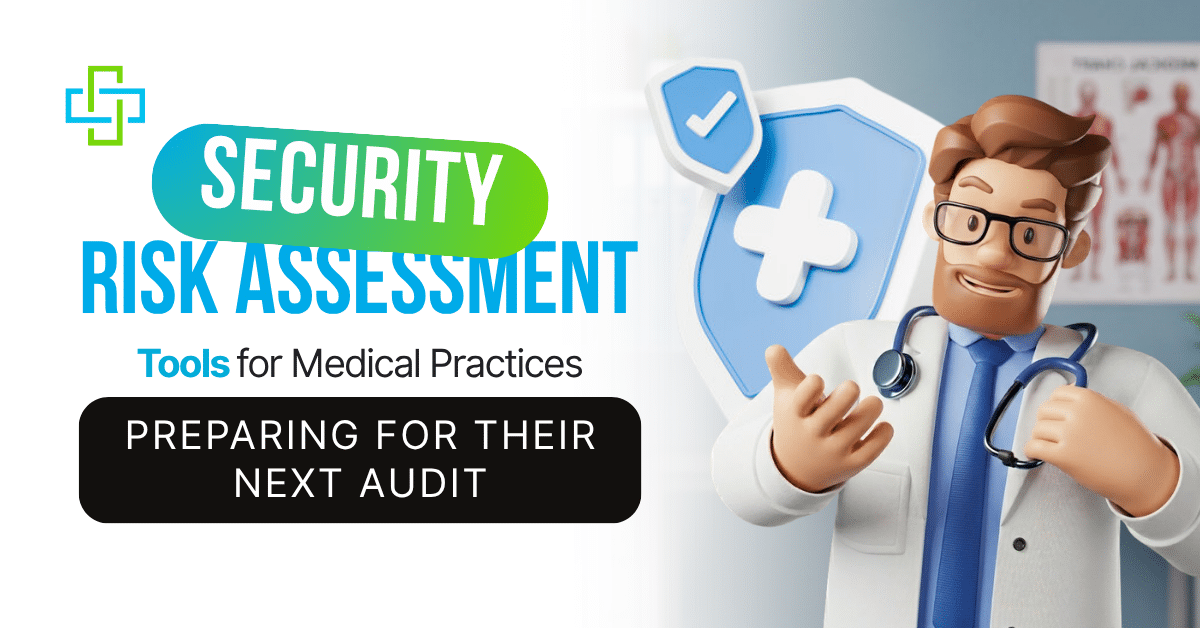
Every medical practice that handles electronic protected health information has a legal obligation to identify its weak points before someone else does. That obligation isn’t optional, and the Office for Civil Rights has made clear it isn’t going away.
Security risk assessment tools exist to help practices and their billing partners meet that obligation without hiring a full time security team, but not every tool does the job the same way. This piece looks at what these tools cover, where they fall short, and what a practice should ask before choosing among the security risk assessment tools on the market today.
Why Security Risk Assessment Tools Matter Right Now
OCR launched a Risk Analysis Initiative in October 2024, and the agency has remained active with it since. The first enforcement action under that initiative was a $90,000 settlement with Bryan County Ambulance Authority in Oklahoma, and OCR has continued announcing additional enforcement actions involving organizations that failed to perform adequate risk analyses. An incomplete or outdated risk analysis remains one of the most common findings in HIPAA Security Rule enforcement, making it a priority for medical practices and their business associates.
That pattern matters for billing companies as much as it does for clinics. Billing operations handle claims data, patient identifiers, and payer communications daily. And a gap in any one of those channels can expose a practice to many of the same HIPAA and cybersecurity risks faced by larger healthcare organizations. Security risk assessment tools give a practice a repeatable way to spot those gaps before a regulator, or a hacker, finds them first.
What HIPAA Requires From a Risk Analysis
The HIPAA Security Rule, at 45 CFR § 164.308(a)(1)(ii)(A), requires covered entities and business associates to conduct an accurate and thorough assessment of the potential risks and vulnerabilities to the confidentiality, integrity, and availability of electronic protected health information they hold. The rule doesn’t prescribe a single method or checklist for completing that assessment. Because organizations can choose the approach that best fits their environment, many use security risk assessment tools to organize the process, document findings, and identify areas that need attention.
The Free HIPAA Security Risk Assessment Tool From HHS
The Office of the National Coordinator for Health IT, working alongside OCR, publishes a free HIPAA security risk assessment tool aimed mainly at small and midsize providers. The current release, version 3.6, runs as a Windows desktop application or as an Excel workbook for users who need a lighter setup. It walks users through a comprehensive series of multiple-choice questions covering administrative, physical, and technical safeguards before generating a report a practice can save and present during an audit. A “reviewed by” confirmation feature added in the latest version lets compliance staff record approvals and dates for each section, which helps with audit tracking.
Where Free Tools Fall Short
The HHS tool is a solid starting point, and its own user instructions say plainly that it isn’t a guarantee of compliance. A number of limitations show up quickly once a practice tries to put it to work.
- It doesn’t assign risk levels automatically or tell a practice which policies to write in response to a finding.
- It was built with smaller practices in mind, so groups with several locations or larger billing operations often outgrow it fast.
- It stores data locally on one machine, which makes version control and team collaboration awkward.
- It doesn’t track remediation over time or send reminders when a follow up review comes due, a gap that pushes many growing practices toward paid security risk assessment tools instead.
Software Versus Security Risk Assessment Services
Once a practice outgrows a tool built around a spreadsheet, the choice usually comes down to paid software platforms or working with security risk assessment services staffed by people who do this work daily. Both routes can help organizations meet the HIPAA risk analysis requirement, but they fit different situations. Many billing companies start with free security risk assessment tools and move to a paid option once their vendor list and location count grow past what a spreadsheet can track cleanly.
Software platforms are built for practices with an internal compliance lead who has the time and background to run interviews, score findings, and keep documentation current. Security risk assessment services fit practices without that staffing, or ones handling several locations, multiple EHR systems, or a long list of business associates that each need their own review. A billing company working across dozens of client accounts often falls into that second group, since the number of systems and vendor relationships involved grows faster than a small internal team can track alone.
What to Look for in Security Risk Assessment Tools
Not every product marketed under that label maps cleanly to the HIPAA Security Rule, and sorting through the crowded market of security risk assessment tools can feel harder than the assessment itself. Before signing up for one, a practice should compare a few things side by side.
- Direct alignment with 45 CFR § 164.308(a)(1)(ii)(A), rather than a generic security checklist borrowed from another industry.
- A threat library built around healthcare workflows, including EHR misconfigurations, business associate agreement gaps, lab interface vendors, and mobile access to patient records.
- Support for tracking remediation after the assessment ends, not just producing a single report.
- The ability to add users, locations, and vendors as a practice or billing operation grows.
- Clear reporting that a compliance officer can hand to an auditor without extra formatting work.
A generic governance platform built for SOC 2 or ISO 27001 work can miss several of these points. Those platforms are strong for cloud infrastructure monitoring, but they weren’t built around the HIPAA risk analysis standard, so a healthcare organization using one often still needs a separate assessment focused on ePHI.
Common Gaps in Billing Related Risk Assessments
Billing teams sit in an unusual spot. They touch clearinghouse connections, payer portals, remote access tools, and often several different EHR or practice management systems at once. A risk analysis that only looks at the clinical side of a practice can miss exposure sitting inside the billing workflow itself.
Certain areas turn up often once a review looks closely at billing operations.
- Shared logins across billing staff instead of individual, traceable accounts.
- Old business associate agreements that don’t reflect current vendors or subcontractors.
- Remote access for billing staff without multifactor authentication in place.
- Claims data sitting in email attachments or unsecured file transfers rather than encrypted channels.
Catching these during a formal assessment, rather than after a complaint or a breach, is the whole point of running one on a set schedule instead of once and forgetting about it. Security risk assessment tools built with billing workflows in mind, not only clinical operations, tend to surface these problems before they turn into bigger ones.
How Often a Practice Should Run an Assessment
A one time review satisfies very little in practice, even if it appears to check a compliance box. OCR’s guidance treats risk analysis as an ongoing process rather than a single project. Many healthcare compliance professionals recommend performing a comprehensive assessment at least once a year, along with additional reviews whenever major changes occur to systems, vendors, or operations.
Several situations should push a practice to run security risk assessment tools outside that yearly schedule.
- Adding a new EHR, billing platform, or clearinghouse connection.
- Opening a new location or bringing on a new business associate.
- Recovering from a security incident, phishing attempt, or lost device.
- A meaningful change in staff who handle patient data or billing records.
Between full reviews, smaller quarterly checks on higher risk systems, like remote access tools or systems holding claims data, catch problems before they turn into the kind of gap OCR looks for during an investigation. Practices that treat security risk assessment tools as a once a year task, rather than a living process, tend to be the ones OCR flags for missing or outdated documentation.
HIPAA Security Rule Changes on the Horizon
In January 2025, HHS published a Notice of Proposed Rulemaking that would remove the longstanding “addressable” designation for several technical safeguards.
Under the proposal, encryption of ePHI at rest and in transit and multifactor authentication for systems handling ePHI would become mandatory. The proposal also includes new requirements for patch timelines, penetration testing, and asset inventories.
As of this writing, the rule remains proposed. Earlier federal regulatory agendas suggested spring 2026 as a possible target for a final rule, but no final version has been published, and HHS has not announced a confirmed timeline for completing the rulemaking process.
Practices and billing partners that keep their security risk assessment tools and related policies current now will have fewer gaps to address if the rule is finalized.
How Prime Well Med Solutions Approaches Risk Assessments
Prime Well Med Solutions works with medical practices across several specialties, and billing data moves through our systems the same way it moves through a provider’s own network. We treat a current, documented risk analysis as part of that responsibility rather than a separate compliance task handled once a year and set aside. Practices that partner with Prime Well Med Solutions get billing support built around the same safeguards a strong risk analysis calls for, including controlled access, encrypted data handling, and vendor agreements kept up to date as relationships change.
Choosing between a downloadable tool and a full assessment service usually comes down to staffing and the number of systems involved. A single location practice with one EHR and a small team may do fine with free security risk assessment tools like the HHS option. A practice working with an outside billing partner, multiple locations, or several vendors touching patient data will usually get more out of a paid platform or a service built around healthcare’s risk profile. Either way, the assessment itself isn’t the finish line. What a practice does with the findings afterward is what keeps patient data, and the practice’s standing with OCR, out of trouble.