Skip to content
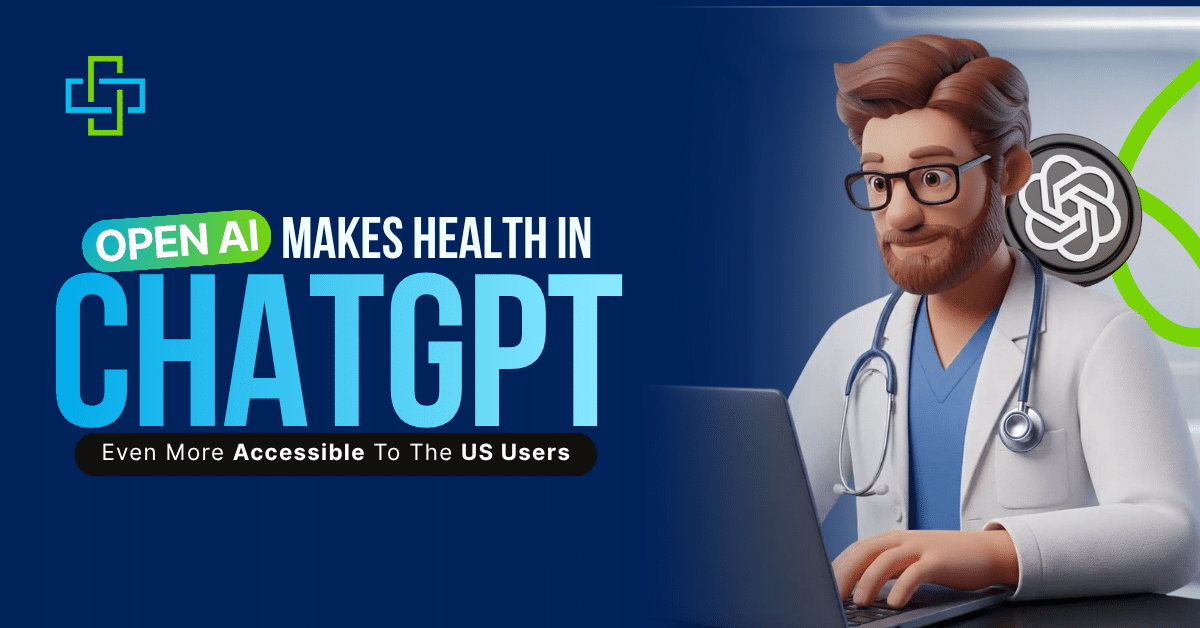
This week, OpenAI makes Health in ChatGPT generally accessible, allowing Americans to connect the chatbot directly to their health applications and medical data. This release removes the item off the queue and makes it available to ChatGPT’s broader user base. The functionality had been under restricted testing since January 2026.
Why OpenAI Is Pushing Further Into Health
ChatGPT already answers a lot of enquiries about health. Over 300 million people ask health-related queries per week, according to OpenAI, up from 230 million only seven months prior in January. This expansion takes place against the backdrop of that growth: OpenAI is creating infrastructure around health rather than viewing it as a side use case. As AI becomes more integrated into healthcare workflows, it could also influence areas such as medical practice management, where organizing patient information and streamlining administrative processes are increasingly important.
Ashley Alexander, OpenAI’s VP of Health Products, pointed to why that context matters during a media briefing: “The average doctor appointment in the United States is less than 15 minutes.” That gap is part of what this expansion is meant to close.
A portion of such infrastructure was purchased rather than constructed. Torch, a healthcare firm that compiles test results, prescription lists, and doctor visit notes into a single record, was purchased by OpenAI in January. The acquisition is essentially the foundation of what Health in ChatGPT performs with linked medical information; Torch’s team had referred to their product as a “context engine” for dispersed health data.
What Users Can Actually Connect
Apple Health, One Medical, Function Health, and medical records from hospital systems using Epic or Oracle Health are just some of the connectors offered at launch. OpenAI says it chose them initially because they provide the most immediate context, and additional linkages are planned.
Users select what to link, nothing links automatically, and ChatGPT automatically requests consent before utilising the information to formulate a response. You can disconnect at any moment.
Two Different Models, Two Different Jobs
OpenAI distinguished its free and premium levels here. GPT-5.5 Instant, the model offered on ChatGPT’s free subscription, has received improvements targeted at recognising when a symptom need urgent care and asking improved follow-up questions.
OpenAI claims that in order to get there, it depends on a network of medical advisers from over 60 nations who create test scenarios and score standards that include safety, accuracy, and proper escalation of care. Rebecca Soskin Hicks, a paediatrician on that team, explained that the objective was to test the model against complex, real-world issues instead of tidy textbook ones, and to do so with a user’s linked health data taken into account rather than simply the query.
The Redesign Nobody Asked For, Fixed
When ChatGPT’s initial version of Health was tested with early users in January, it was housed in a distinct tab within the app. It failed to stick. More than 70% of testers continued to have health-related chats in the standard chat window, according to OpenAI, which makes sense given that individuals don’t often separate their health-related enquiries from other aspects of their life. With the user’s consent, every communication may now be informed by connected health context thanks to the widespread distribution.
Data Handling and the Line OpenAI Says It Won’t Cross
According to OpenAI, connected medical records and Apple Health data, as well as any conversations including them, are prohibited from foundation model training and ad targeting, whatever of the general training parameters a user has selected elsewhere in ChatGPT. The user’s usual preferences are still followed in conversations that do not involve linked health data.
Where the Skepticism Comes In
Without resistance, none of this is taking place. Studies published in the BMJ and Nature Medicine have shown instances of chatbots providing erroneous or conflicting medical advice. More specifically, a Florida man is suing OpenAI on the grounds that ChatGPT provided him with medical advice that caused him to postpone receiving treatment for a pulmonary embolism. The lawsuit, which is supported by the charity Tech Justice Law, requests that the court put Health in ChatGPT on hold while an impartial assessor examines its security.
AI chatbots are now used by millions of people to check symptoms, look up ailments, or understand medical expenses, and that number continues to rise as technologies like this one are incorporated into everyday health choices. The findings from Nature Medicine and BMJ are significant because of this scale; the same issues with accuracy and consistency that those studies highlight become more significant when a chatbot pulls information from a patient’s real medical data rather than merely responding to a generic query.
Ashley Alexander, VP of Health Products at OpenAI, did not back down from the launch when questioned directly about the case. Her response was based on a well-known OpenAI talking point: a lot of people already look to the public internet for health-related information, and the objective is to make those answers more understandable rather than to take the place of a doctor’s judgement.
According to OpenAI’s internal assessments, its current algorithms accurately refer users to emergency treatment over 99% of the time when it is essential, and in a comparable percentage of situations, they prevent needless escalation. It is important to note that those numbers are based on OpenAI’s internal assessments rather than an impartial study, which is precisely what the ongoing action is requesting a judge to mandate.
What This Means Beyond the Headlines
For clinicians and digital health firms, the practical gain isn’t the feature itself, but what patients will start bringing to appointments as a result. A tool that can put together a patient’s labs, medications, and wearable trends and explain them in plain language will change what “coming prepared” for a visit looks like, raising new questions about how that AI-generated context is reconciled with the chart a clinician is actually working from.