Skip to content
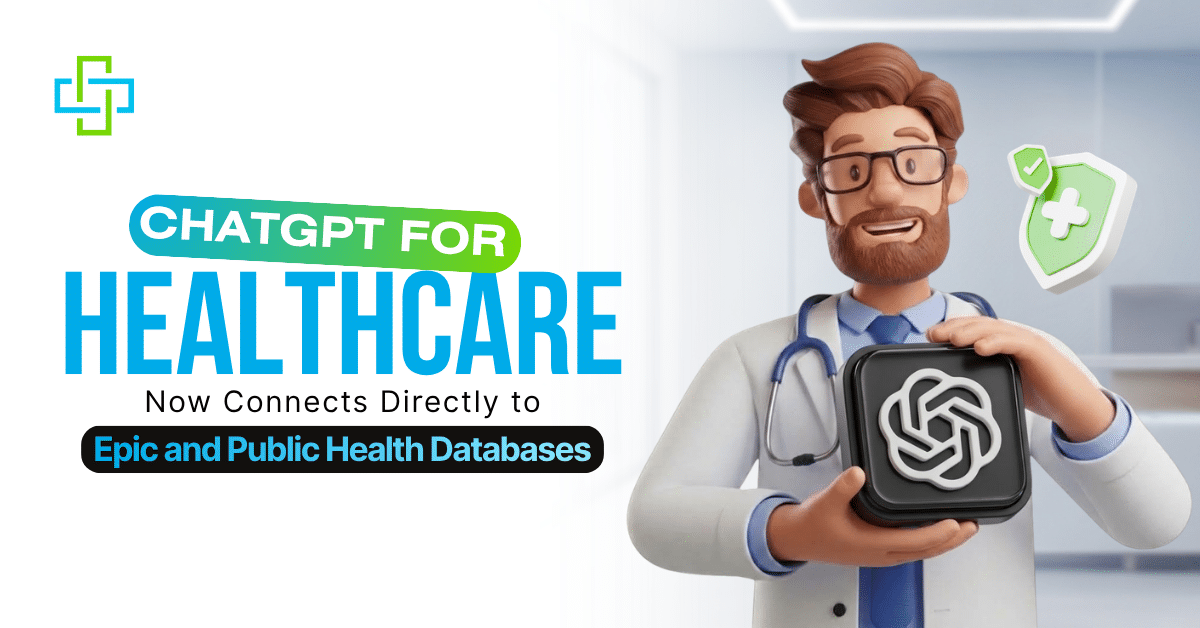
ChatGPT for Healthcare just got a lot closer to the systems clinicians already use every day. OpenAI announced on September 1, 2026, that the platform now pulls directly from Epic’s electronic health record system and from nine public healthcare databases, moving it from a general-purpose assistant toward something built to sit inside actual clinical workflows.
Understanding How Exactly The Epic Integration Actually Works
The new EHR System connection lets authorized clinicians access and summarize patient records without leaving ChatGPT, or without leaving the patient chart if they’re working inside Epic itself. It pulls together clinical notes, lab results, medications, and specialist documentation into one view. Notably, it’s read-only. Nothing gets written back into the patient record, so clinicians get a faster way to review a history or catch up on what’s changed, without the integration touching the record itself.
UCSF Health signed on as the pilot partner for this feature. According to the health system’s CEO, Suresh Gunasekaran, the goal is to see whether pulling scattered patient information together faster gives clinicians more time with patients instead of more time synthesizing charts, and UCSF’s frontline teams are still working through how well that holds up in daily practice.
Line to Nine Trusted Health Data Sources
Alongside the Epic work, OpenAI added a plugin connecting ChatGPT to nine official public health sources, including ClinicalTrials.gov, CMS Coverage, RxNorm, DailyMed, and PubMed. Instead of searching each database separately, teams can now query specific records, fields, and identifiers directly through ChatGPT. OpenAI gave a couple of concrete examples: a research team checking ClinicalTrials.gov for actively recruiting studies and comparing eligibility criteria, or a pharmacy team confirming a drug’s current label and warnings through DailyMed.
Where This Fits in OpenAI’s Broader Health Push?
None of this is happening in isolation. ChatGPT for Healthcare first launched in January 2026 as a workspace for researchers, clinicians, and administrators, built on GPT-5 models tested with physician input from the start. OpenAI followed that in April with ChatGPT for Clinicians, a free tool aimed squarely at documentation and medical research tasks. The Epic and public data integrations extend that same direction: fewer separate tools, more of the clinical workflow happening inside one system.
The Numbers Behind OpenAI’s Safety Claims
OpenAI leans heavily on its physician review process to back up these features. The company works with several hundred physician advisors spanning 60 countries and 26 medical specialties, and that group has now reviewed more than 700,000 model responses drawn from real-world healthcare scenarios.
For the EHR-connected features specifically, physicians evaluated ChatGPT’s responses across 27 clinical use cases, things like pre-visit prep, timeline building, medication review, and handoff summaries, producing 4,363 individual ratings. OpenAI reports a 99.1% safety rating across that set. A separate accuracy review, run against large U.S. healthcare datasets, found that responses using each of the five connected data sources tested scored “good” or better accuracy more than 93% of the time.
Built for Enterprise Compliance, Not Just Clinical Use
ChatGPT for Healthcare pairs its clinical features with the kind of enterprise controls hospital IT departments actually require: role-based access, single sign-on, and audit logging. With a business associate agreement in place, organizations can run ChatGPT Work, Codex, and other connected apps in the same HIPAA compliant workspace rather than juggling separate tools with separate compliance reviews.
AdventHealth is one of the health systems already using this broader toolset. Its Chief AI Officer, Robert Purinton, framed the goal in terms of freeing up caregiver time rather than the technology itself, the idea being that less time spent on routine documentation and data-gathering tasks means more time available for direct patient care.
What This Signals for Healthcare Organizations?
For hospitals and health systems still deciding how deeply to integrate AI into clinical workflows, this update narrows the gap between “AI tool on the side” and “AI embedded in the chart.” A read-only EHR connection is a conservative first step, and OpenAI’s own safety numbers, while strong, come from OpenAI’s own evaluation process rather than an independent third party. Organizations considering adoption should watch how UCSF’s pilot performs in practice over the next several months before treating these figures as a settled answer.