Skip to content
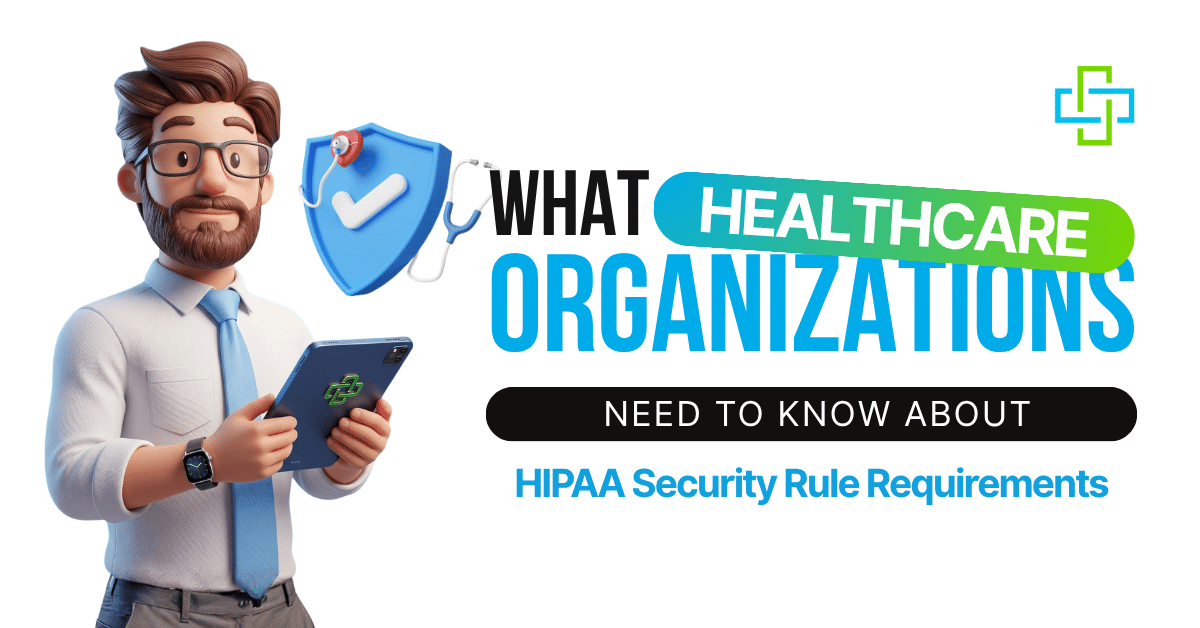
Healthcare data breaches are striking the industry harder than ever. And 2026 may prove to be one of the most consequential years for HIPAA security rule requirements due to proposed regulatory changes and heightened cybersecurity scrutiny. The proposed overhaul to the HIPAA security rule requirements is moving toward finalization. OCR’s audit program is fully active and resolution agreements mounting with fines are stretching into the millions. The pressure on covered entities has never been greater. Underlying nearly every enforcement action the agency takes is a single thread: failure to properly meet HIPAA security rule requirements.
Compliance tends to get treated as a background task until an audit or a breach forces it to the front. Doing so carries serious financial risk in 2026. Oversight has grown considerably stricter, and no practice or health system is too small to draw a penalty.
What the HIPAA Security Rule Requirements Cover
Grounded in 45 CFR Part 160 and Subparts A and C of Part 164, the HIPAA Security Rule requirements establish national standards for protecting electronic protected health information, commonly called ePHI. Coverage extends to health plans, healthcare clearinghouses, and healthcare providers who transmit data electronically, as well as their business associates.
Confidentiality, integrity, and availability of ePHI are the three pillars the rule demands, alongside protection against reasonably anticipated threats or unauthorized disclosures. What sets HIPAA security rule requirements apart from many compliance frameworks is built-in flexibility. Rather than prescribing one-size-fits-all technology solutions, they require organizations to tailor their approach to their size, capabilities, and risk profile.
Flexibility is not a loophole, though. Documented reasoning is expected behind every compliance decision, and organizations that treat “addressable” requirements as optional have consistently paid for that misreading.
The Three Pillars of HIPAA Security Rule Requirements
HIPAA security rule requirements fall into three categories of safeguards, and every organization must address all three. Each carries equal weight. Gaps in any one category can unravel an otherwise solid compliance program.
Administrative Safeguards
Administrative safeguards make up the structural foundation of any compliance effort. More than half of the rule’s total requirements live here. This governs how an organization manages people, policies, and processes related to ePHI.
Seven areas anchor this category.
- Security management process. A documented risk analysis, risk management plan, sanction policy, and regular review of information system activity are all mandatory.
- Assigned security responsibility. Every covered entity must designate a named individual with the authority to develop and implement security policies.
- Workforce security. Access must be controlled by job role, with clear processes for onboarding, role changes, and offboarding based on least-privilege principles.
- Information access management. Role-based rules must confirm that only authorized personnel can reach patient data, with formal approval processes for any exceptions.
- Security awareness and training. Staff education must cover phishing awareness, proper ePHI handling, and how to recognize and report suspected violations.
- Contingency planning. A data backup plan, disaster recovery procedures, and a tested emergency mode operation plan are all required.
- Evaluation. Periodic technical and nontechnical assessments must verify that safeguards remain effective as technology and operations evolve.
Physical Safeguards
Physical safeguards protect the environments where ePHI is stored and used, including the buildings, equipment, and media that store or transmit it. Frequently underestimated, this category has surfaced violations in OCR investigations as basic as unlocked server rooms and untracked portable devices leaving a facility.
Requirements here include facility access controls that limit and validate who enters spaces where ePHI is stored. Workstation use policies to define how and where employees may access patient data. Workstation security measures such as cable locks and restricted device placement and device and media controls governing how portable drives, laptops, and other storage media are disposed of, transferred, or reused.
Physical exposure carries the same consequences as a digital breach. Regulators treat both with equal seriousness.
Technical Safeguards
Technical safeguards are the technology-based controls that protect ePHI and restrict access to it. Covering everything from user authentication to encrypted data transmission, this category addresses how systems monitor activity and protect information in transit and at rest.
Four main areas fall under technical safeguards.
- Access controls. Unique user identification, automatic logoff, and encryption and decryption capabilities work together to keep ePHI off-limits to unauthorized users.
- Audit controls. Hardware, software, or procedural mechanisms must record and examine activity within systems containing ePHI.
- Integrity controls. Covered entities must deploy tools that verify ePHI has not been altered or destroyed without authorization.
- Transmission security. ePHI must be encrypted whenever it moves across networks, with measures in place to guard against unauthorized interception.
Earlier HIPAA security rule requirements allowed some technical specifications to be treated as “addressable” rather than strictly mandatory. That distinction has become a source of repeated compliance failures, and the 2026 overhaul discussed below is set to eliminate it.
Final HIPAA Security Rule Requirements: What Changed After 2013 and What 2026 Brings
The last major update to the HIPAA Security Rule arrived through the HIPAA Omnibus Rule in 2013. It implemented HITECH Act provisions and extended the final HIPAA security rule requirements directly to business associates. Since then, technology has transformed, ransomware attacks have escalated sharply, and enforcement has grown considerably harder.
Late 2024 brought a Notice of Proposed Rulemaking from HHS representing the most substantial proposed revision in over a decade. Under the proposed changes, all implementation specifications would become fully mandatory, removing the “required vs. addressable” distinction that has misled many organizations for years. HHS identified May 2026 as a target date for finalizing the rule, although federal rulemaking timelines can change. If the rule is finalized, covered entities would generally have 240 days from publication to comply.
If HHS finalizes the proposed rule substantially as written, healthcare organizations would face several new obligations. While these changes are not yet in effect, they provide a clear indication of where HIPAA security expectations are heading. Proposed requirements include the following:
- Annual maintenance of a technology asset inventory and network map
- Mandatory multi-factor authentication across all ePHI access points
- Encryption of ePHI both in transit and at rest
- Biannual vulnerability scans and annual penetration testing
- Network segmentation as a standard practice
- Annual verification by business associates that their technical safeguards meet required standards
- Comprehensive written documentation of all policies, procedures, plans, and analyses
Waiting for the final rule before preparing is a losing strategy. Building compliance infrastructure now means absorbing new mandates without scrambling when deadlines arrive.
Already in force are the existing HIPAA security rule requirements, which carry full legal weight regardless of any proposed changes. OCR is not waiting for new rules to act on the current ones. Every covered entity operating in 2026 is subject to every provision of the existing HIPAA security rule requirements, and the agency’s enforcement record leaves no doubt about its willingness to pursue action.
Why Security Risk Assessment Services Have Become Non-Negotiable in 2026
Enforcement activity heading into 2026 tells a consistent story. Failing to conduct a thorough, enterprise-wide risk analysis is the most cited compliance gap in every resolution agreement OCR closes. Absent that analysis, the foundation of HIPAA security rule requirements goes unbuilt, and the agency has treated that failure as the clearest marker of systemic noncompliance.
Recent OCR resolution agreements have ranged from tens of thousands to millions of dollars, depending on the severity of violations.
Professional security risk assessment services exist precisely to close this gap. Rather than relying on internal teams who may lack specialized cybersecurity expertise, partnering with qualified professionals delivers concrete advantages.
- A documented, methodology-driven risk analysis that satisfies OCR’s standards
- Identification of vulnerabilities across all electronic systems that store or transmit ePHI
- Prioritized remediation recommendations tied directly to the HIPAA security rule requirements
- Evidence of a good-faith compliance effort that can reduce penalties if a breach does occur
- Support that evolves as the regulatory environment continues to change
HHS provides a free Security Risk Assessment Tool designed for smaller organizations, but it is a starting point and not a substitute for professional judgment. Using the tool without a qualified review of its outputs still leaves organizations exposed when OCR comes calling.
Well-executed security risk assessment services do not just satisfy one checkbox within the HIPAA security rule requirements. Better outcomes follow across every other safeguard category. Knowing where vulnerabilities exist lets organizations direct resources toward access controls, workforce training, and contingency planning with far greater precision.
The Ending Note
Working with HIPAA security rule requirements takes more than a checklist. Attention to how your organization stores, transmits, and accesses patient data matters deeply. As does a commitment to updating those practices as both threats and regulations shift.
At Prime Well Med Solutions, we offer security risk assessment services built around the requirements OCR is actively enforcing in 2026. Our process goes beyond surface-level reviews to deliver thorough analyses tied to your actual workflows, technology environment, and risk exposures. We help healthcare organizations understand where vulnerabilities exist, which remediation steps are most urgent, and how to document compliance decisions in a way that holds up to scrutiny.
From initial assessments to policy reviews and staff training support, Prime Well Med Solutions partners with covered entities and business associates at every stage of their compliance program.
Regulatory pressure on HIPAA security rule requirements will only grow as the 2026 final rule moves closer to publication. Investing in compliance now, rather than reacting to an audit or a breach, is what separates organizations that absorb change from those that scramble to catch up.
Ready to evaluate your organization’s current security posture? Contact Prime Well Med Solutions to learn how our security risk assessment services can help you meet HIPAA security rule requirements with confidence.